Ductless or Central Air? How to Decide for a Yakima Valley Home
The right system depends less on the brand and more on what is already inside your walls and how you live in each room.
October 6, 2026 · 4 min read
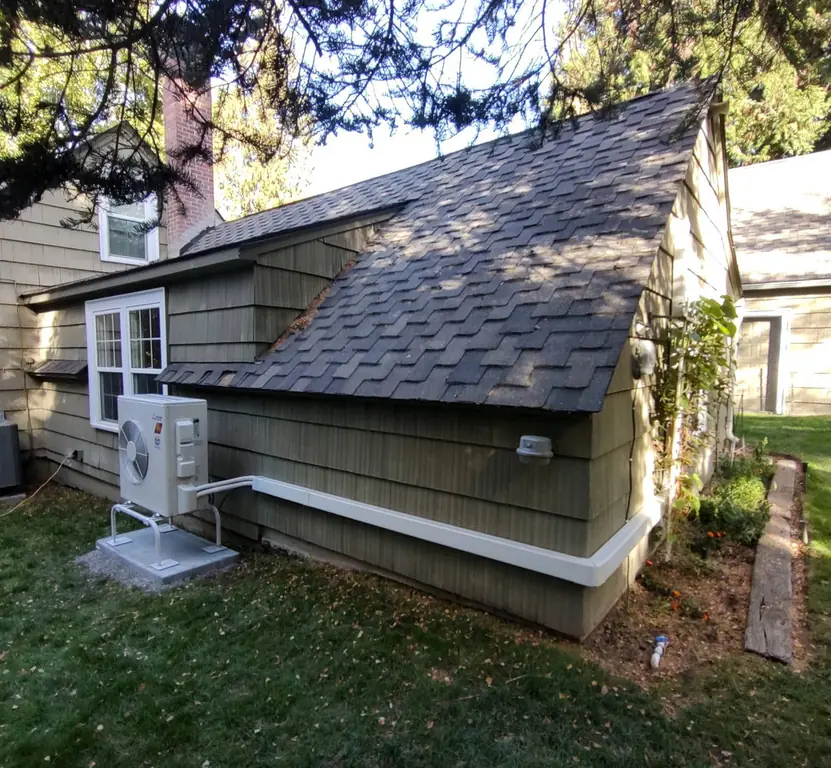
If you live in Selah, Yakima or anywhere else in the Yakima Valley, you have probably heard both pitches: put in ductless mini splits, or stay with a furnace and central air. Both work. The right answer depends on the house you have, the rooms you actually use, and what is already hiding in the walls and attic. Here is how we talk it through with homeowners and small-office owners who stop by our Selah showroom.
Start with what the house already has
The first question is simple: does the building have ductwork, and is it in decent shape? A home with a furnace, supply and return ducts, and a register in every room already owns the most expensive part of a central system. Replacing the furnace and adding central air to that existing network is a straightforward job. Traditional systems are especially effective in larger homes with existing ductwork, and that describes a lot of family homes across the valley.
A home without ducts is a different story. Older houses, converted garages, shop offices, sunrooms and finished basements often have nowhere to hide a duct run. Cutting chases through finished walls and ceilings can turn into a renovation before a single vent blows air. A ductless system avoids that, because each indoor head connects to its outdoor unit with a small bundle of refrigerant tubing and electrical wiring instead of a large duct.
Where ductless tends to win
- Homes without ducts, where central air would mean building a duct system from scratch.
- Room additions, bonus rooms and garage conversions that the existing system was never meant to heat or cool.
- Rentals and small offices, where one or two spaces need their own comfort without touching the rest of the building.
- Historic homes and renovation projects where opening up walls and ceilings is not realistic.
- Basements, attics and garages that always seem a few degrees off from the rest of the building.
The common thread is flexibility. A ductless head heats and cools the space it sits in, so you are not asking a distant furnace to push air through long runs and hope it arrives at the right temperature.
Where central ductwork still makes sense
Ductless is not automatically the answer. If you have a sound duct system and a furnace that is simply at the end of its life, a new furnace with a matching air conditioner can be the cleanest path. We offer traditional equipment from American Standard, Ameristar and Bosch for exactly that reason. Some people also prefer one thermostat and walls with no indoor units on them, and that is a perfectly good reason to stay with ducts.
A few things are worth checking on an existing duct system. Do the ducts run through an unheated attic or crawl space? Have some rooms always been too hot or too cold? Is the system noisy? Ducts that pass through unconditioned space can lose some of the heat or cooling you paid for before it reaches the room. If rooms are uneven today, new equipment connected to the same ducts will not change that by itself.
Zoning is the difference you feel every day
A central system treats the whole building as one zone: one thermostat, one temperature, every room. A ductless system lets each indoor head hold its own setting. One outdoor unit can feed up to eight zones, so the bedroom can sit cooler at night, the guest room can idle while nobody is using it, and the home office can run only when someone is working in it.
That control is also where a lot of the energy savings come from. You can choose not to heat or cool some zones in the house or office at all. If your household has never agreed on a thermostat setting, that alone may settle the question.
Questions to bring to any estimate
- Do my current ducts run through conditioned space, and are they in good shape?
- Which rooms are uncomfortable today, and will the new system fix those rooms or only replace the equipment?
- How many zones fit how we actually live: one head per room, or one head for a large open area?
- Where would the indoor and outdoor units go, and how would the lineset be routed and covered?
- What does yearly maintenance look like for this kind of system?
- What financing options are available, and does my utility offer anything for the system I am considering?
On that last question: utility companies sometimes offer incentives and rebates for ductless heating, so ask your utility what is available before you commit. Programs change, and we would rather you hear the current terms from the source.
Come look at both
If you are weighing the two, the easiest way to decide is to see a ductless system in person and talk through your floor plan with someone who installs both kinds. Call us at (509) 698-2470 or stop by the Selah showroom at 311 S 1st St, open Monday through Friday from 9am to 5pm and closed from 12 to 1 for lunch. Bring a rough sketch of your home or office, and we will go from there.
509 Ductless, (509) 698-2470
Call (509) 698-2470More articles
What a Proper Mini Split Cleaning Looks Like, and Why Once a Year
Most owners never see inside their indoor head, which is exactly why dirt can build up there for years.
How Ductless Zoning Works, and How to Plan It Room by Room
The planning that matters happens at your floor plan, long before anyone picks a model.